

The autonomic nervous system is a part of the peripheral nervous system. It is a network of nerves throughout the body that controls involuntary (unconscious) physiological processes such as heart rate, respiration, blood pressure, digestion, sexual arousal, etc.
The autonomic nervous system works continuously, even when you’re sleeping. This is because ANS is regulated by the hypothalamus, a part of the brain that controls the hormone and other functions such as temperature.
Overview of the Nervous System
The human body consists of two subunits of the nervous system. Central Nervous System (CNS) and Peripheral Nervous System (PNS).
- Central Nervous System: CNS consists of the brain and spinal cord.
- Peripheral Nervous System: PNS consists of every part of the nervous system outside the brain and spinal cord. Thus, it is also subdivided into two subsystems. Somatic Nervous System and Autonomic Nervous System.
The autonomic nervous system comprises approximately 90% of the peripheral nervous system.
Components of the Autonomic Nervous System
The autonomic nervous system regulates involuntary functions and is divided into three components. These three components of the ANS are as follows:
- Sympathetic Nervous System (SNS)
- Parasympathetic Nervous System (PSNS)
- Enteric Nervous System (ENS)

Components of the Autonomic Nervous System
Sympathetic Nervous System
The sympathetic nervous system (SNS) contains afferent and efferent fibers that are responsible for providing sensory input and motor output to the CNS. The cell bodies of sympathetic neurons are present in intermediolateral columns or lateral horns of the spinal cord. It is responsible for the body’s fight-or-flight response. In addition, the neurons of the SNS prepare a body to react to any stimulus in the environment, such as stress, anxiety, or danger. For example, a person’s heartbeat will increase while escaping from danger.
The sympathetic nervous system is activated during stress and is responsible for increasing heart rate (up to 30%), respiration rate, and blood pressure.
Parasympathetic Nervous System
The parasympathetic nervous system (PSNS) also contains afferent and efferent nerve fibers responsible for sensory input and motor output. In addition, parasympathetic neurons cells bodies are present in the ganglia associated with cranial nerves, such as oculomotor, glossopharyngeal, facial, and vagus nerves and the S2-S4 segment of the spinal cord. It is responsible for relaxing the body and reducing physical activity or stress (rest and digestion). In addition, it helps the body to regulate normal body functions such as bladder control, constriction of eye pupils, and slowing the heart rate.
The parasympathetic nervous system is activated during relaxation times and is responsible for decreasing heart rate (up to 30%), respiration rate, and blood pressure.
Enteric Nervous System
It is the third component of ANS and comprises two ganglionated plexus. These are as follows:
Both plexus help the enteric nervous system regulate the function of the gastrointestinal tract and digestion.
Functions of the Autonomic Nervous System
ANS regulates internal body processes. The certain organs and functions that are regulated by the ANS are as follows:
Organs regulated by the ANS
- Eyes
- Salivary Glands
- Heart
- Blood vessels
- Stomach
- Intestine
- Liver
- Bladder
- Lungs
- Genitals
- Digestive glands
- Kidneys
Certain functions regulated by ANS
These include the following:
- Heart and breathing rates
- Blood pressure
- Body temperature
- Digestion
- Blood glucose Levels
- Metabolism (thus affecting body weight)
- The balance of water and electrolytes (such as sodium and calcium)
- Blood acidity levels
- The production of body fluids (saliva, sweat, and tears)
- Urination
- Defecation
- Sexual response
Different components of the ANS control the different functions of the body. For example, some regulate stress, some are active while resting, and some are during digestion. Depending on the parts, the functions of the ANS are described below.
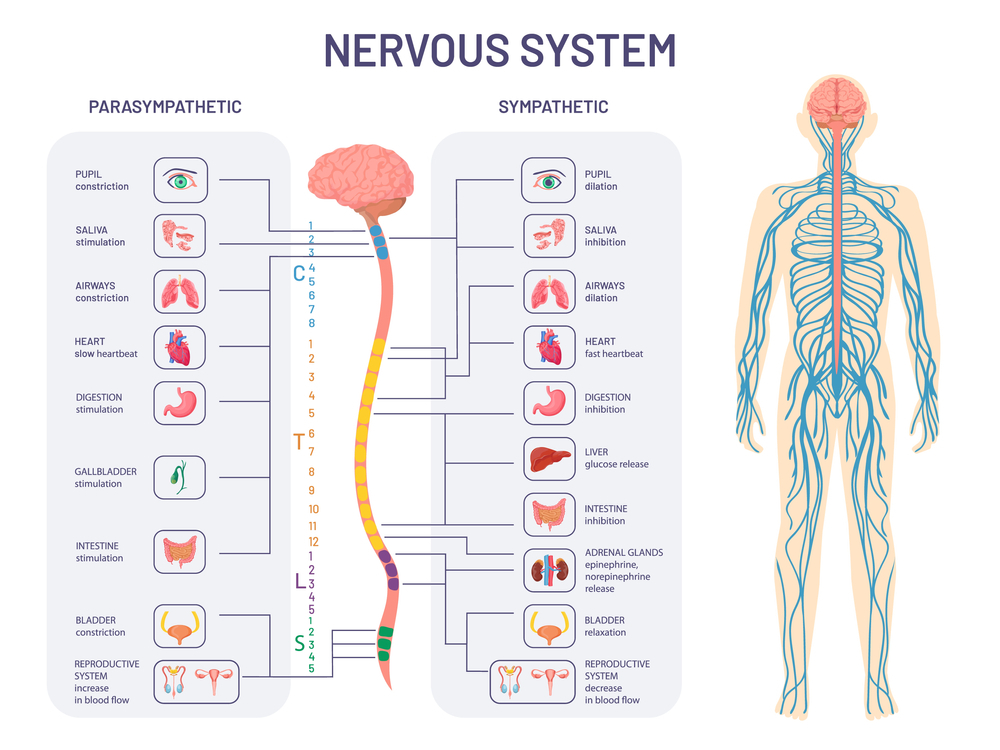
Sympathetic and Parasympathetic Nervous System
Functions of SNS
The functions of the SNS include the following:
- Dilating and expanding pupils
- Increase the heart rate
- Deactivating salivation
- Inhibit digestion
- Dilatation of airways
- Relax the bladder
Functions of PSNS
PSNS is responsible for the following functions.
- Constriction of Pupil
- Slowing heart rate
- Initiating salivation
- Constriction of airways
- Increasing blood flow to the reproductive system
Functions of ENS
ENS is responsible for the following functions:
- Digestion of food
- Contraction and relaxation of the digestive muscles
- Absorption of nutrients
- Improves or directs the blood flow
Diseases affecting the normal functioning of ANS
Several conditions and diseases can cause damage to the autonomic nervous system resulting in autonomic disorders. The common and uncommon conditions that result in ANS disorders are as follows:
Common diseases associated with ANS
These are as follows:
- Diabetes
- Amyloidosis
- Peripheral nerve disorders
- Aging
- Poisons and toxins
- Parkinson disease
Uncommon diseases associated with ANS
- Autonomic neuropathies
- Pure autonomic failure
- Spinal cord injuries or disorders
- Multiple system atrophy
- Certain viral infections, such as COVID-19
- Certain drugs
- Tumors
- Diseases of the neuromuscular junction (where nerves connect with muscles), such as botulism.
- Cervical injuries
- Injuries due to surgery