by Pamela Smith | Mar 24, 2023 | Blog
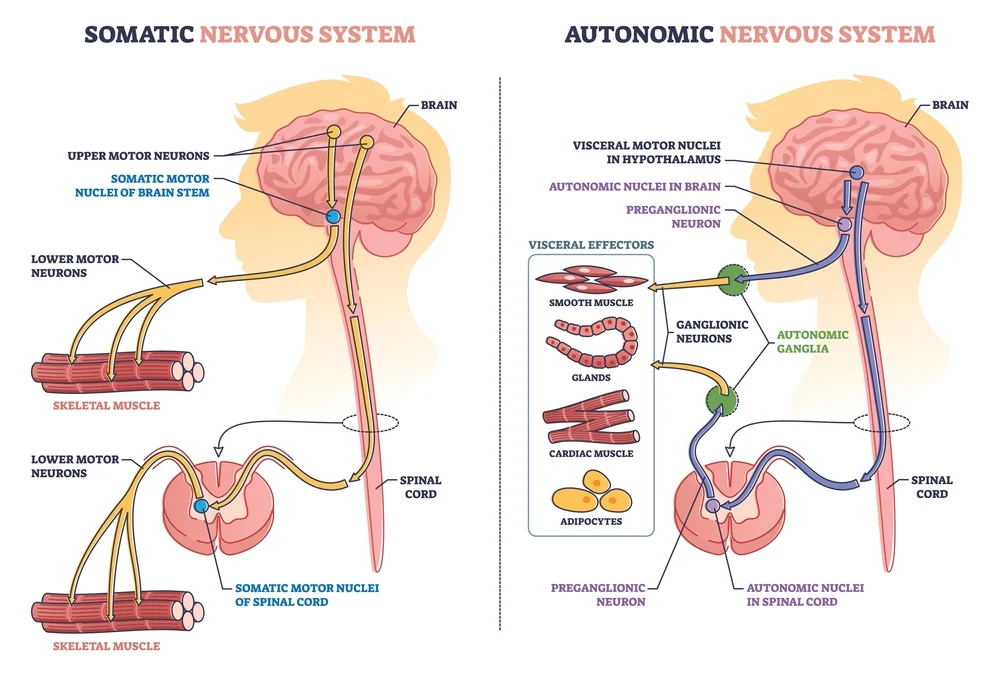
Reflexes are involuntary responses to any stimulus of the nervous system. A neural pathway that controls a reflex action is known as a reflex arc. There are two main types of reflex arc: the somatic reflex arc and the visceral reflex arc. Both are important for...
by Pamela Smith | Mar 21, 2023 | Blog
Dysautonomia is the medical term that explains different medical conditions associated with the autonomic nervous system. It can be caused by various underlying conditions, such as Parkinson’s disease, diabetes, multiple sclerosis, and Guillain-Barre syndrome....

by Pamela Smith | Mar 20, 2023 | Blog
Autonomic Dysfunction or Autonomic Neuropathy -is also known as “Dysautonomia.” It is an umbrella term for several autonomic nervous system disorders. The autonomic nervous system is a subsystem of the nervous system, just like the somatic nervous system....

by Pamela Smith | Mar 17, 2023 | Blog
The Lower Motor Neuron (LMN) is the efferent neuron present in the peripheral nervous system (PNS), which connects the muscle to the Central Nervous System (CNS) for innervation. Furthermore, LMN is a multipolar neuron that connects the UMN to skeletal muscles. Cell...

by Pamela Smith | Mar 16, 2023 | Blog
The somatic nervous system consists of upper motor neurons and lower motor neurons. These two forms a two-neuron circuit. Upper Motor Neuron: It originates in the cerebral cortex and descends to the brain stem and spinal cord. It is responsible for initiating...
by Pamela Smith | Mar 15, 2023 | Blog
Lumbar Spinal Stenosis is the narrowing of the spinal canal due to pressure and compression, which results in impingement of the nerves, further affecting the surrounding muscles and ligaments. The causes and symptoms of LSS include degenerative changes of the spine...
