
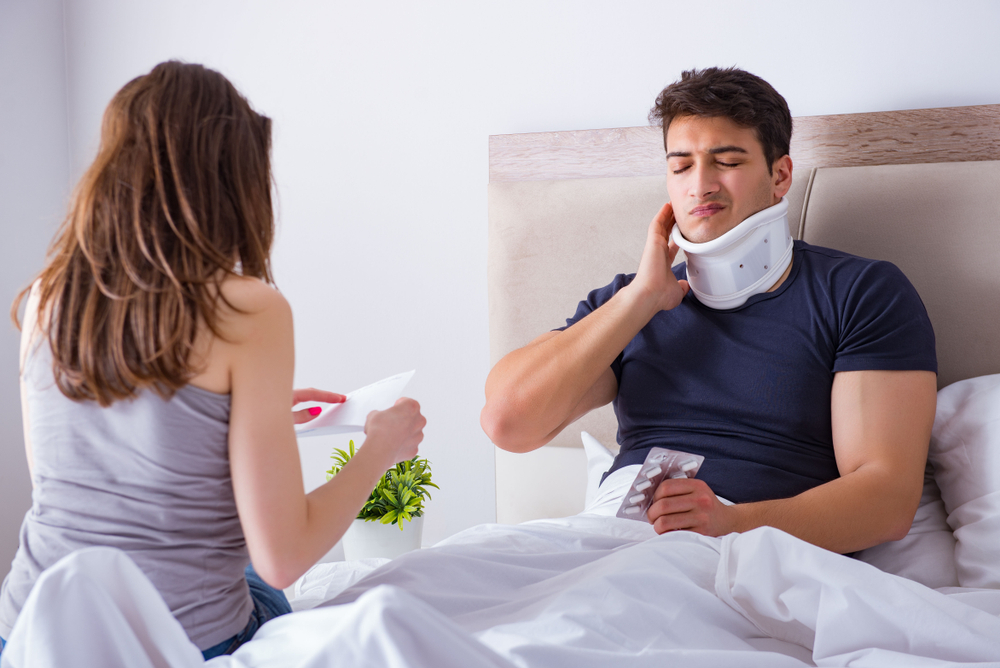
The spinal cord is the bundle of nerves that send messages from the brain to the other part of the body. Any trauma to the spinal cord, such as road traffic accident, fall, and medical diseases, can lead to spinal cord injuries. Spinal cord injuries are subcategorized into two, based on the location and type of the injury. These are incomplete or complete spinal cord injuries, paraplegia, and tetraplegia (quadriplegia).
SCI is the leading cause of paralysis in the United States, accounting for nearly 40% of all paralyzing injuries.
Risk factors of spinal cord injury
Usually, spinal cord injury occurs due to accidents (36.5%), falls (30.5%), sports injuries, violent encounters (14.3%), or surgical complications. However, different factors increase the risk of injuries. These factors are as follows:
- Age
- Gender
- Alcohol Consumption
- Sports or risky activities
- Being Over-weight
- Certain diseases
Age
- People aged 16 and 30 are at higher risk of spinal cord injuries.
- People of age 65 are at greater risk due to the increased fall rate.
Gender
- Spinal cord injuries are more common in males than in females.
- Approximately 20% of females are affected by traumatic spinal cord injuries in the United States.
Alcohol Consumption
- People who consume alcohol in a greater amount are at higher risk of getting SCI.
- About 20% of SCI accounts for the people who drink alcohol.
Sports or Risky activities
- Playing sports without protective gear can lead to severe spinal cord injuries.
- Diving into too-shallow water also increases the risk of SCI.
Being Over-weight
- Being overweight leads to obesity.
- Obesity in various factors results in the weakening of muscles leading to ligamentous injuries, thus causing a spinal cord injury.
Certain Diseases
- Different musculoskeletal or other diseases that affect bones, ligaments, vertebrae, and muscles can lead to spinal cord injuries.
- The most common diseases leading to SCI are osteoporosis, multiple sclerosis, compression by bony spurs, inflammatory conditions, infection, herniated discs, and metastatic cancer.
Complications of spinal cord injury
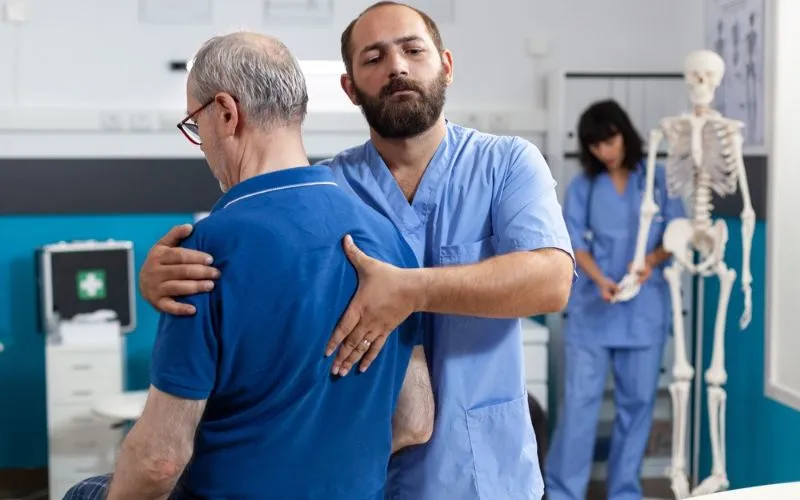
Complications of Spinal Cord Injury
About 282,000 people in the United States live with spinal cord injuries. SCI that affects a person’s spinal cord can result in severe complications. These severe complications include the following:
- Difficulty in Bladder Control
- Bowel Dysfunction
- Pressure Injuries
- Complications in Circulatory Control
- Complications in Respiratory System
- Alteration in Bone Density
- Changes in Muscle Tone
- Lack of Blood Circulation
- Effects on Fitness and Wellness
- Effects on Sexual Health
- Scoliosis
- Difficulty in Sleeping
- Contractures
- Pain
- Depression
Difficulty in Bladder Control
- The bladder works properly as it stores urine from the kidneys.
- However, due to spinal cord injury, the bladder can’t receive proper messages from the brain to function accordingly.
- As a result, changes in bladder function ( such as urine remaining in the bladder for a long time or urine being released in drops) can cause urinary tract infections.
- These conditions can also lead to kidney infections and kidney or bladder stones.
- In the treatment of these complications, relearning of emptying a bladder happens.
Bowel Dysfunction
- Due to spinal cord injuries, alterations in the functioning of the bowel occur. SCI causes changes in bowel movements.
- In this condition, a high-fiber diet helps regulate proper bowel functioning.
Pressure Injuries
- When prolonged pressure is applied to the spinal cord, it results in pressure/ compression injuries of the spinal cord.
- Due to compression injury, an affected person has lost all the sensations below the injury site. It means that the affected part of the body can’t send and receive messages from the brain.
- This also results in the inability to walk, changing position and movement.
- Movement disability results in pressure sores due to the constant pressure on muscles.
- These pressure sores can be prevented with proper precautions and treatment.
- Frequent position changing helps to avoid sores.
Complications in Circulatory Control
- SCI results in several circulatory complications, which include lower or greater blood pressure.
- Orthostatic Hypotension: The condition of low blood pressure that results in swelling and inflammation of the lower extremities. It increases the risk of blood clots and other diseases such as pulmonary embolus or deep vein thrombosis.
- Autonomic Dysreflexia: It is a life-threatening condition in which a person’s blood pressure rises. It occurs at the T6 level of the spinal cord or above it and results in an uncontrolled sympathetic discharge in response to noxious stimuli.
Complications in Respiratory System
- The respiratory system is mainly affected when the injury occurs at the upper level of the spine, where the chest and abdomen are affected.
- Respiratory complications depend upon the location of neurological diseases.
- Cervical and thoracic spinal cord injuries increase the risk of pneumonia and other lung problems.
Alteration in Bone Density
- SCI increases the risk of musculoskeletal diseases such as osteoporosis, arthritis, and fractures below the injury level.
- In patients with SCI, a 98% of prevalence of AC joint arthritis was found.
- These diseases result in changes in bone density.
Changes in Muscle Tone
- In SCI, there are two kinds of muscle tone depending on the type and location of the injury.
- Muscle Spasticity: Uncontrolled tightening and stiffness of the muscle.
- Muscle Flaccidity: Soft and loose muscles, lacking in muscle tone.
Lack of Blood Circulation
- The spinal cord is responsible for carrying out functions of the whole body, such as movement and the transmission of messages that control sensation and mobility.
- An affected person can’t move independently, which results in the least physical activity affecting the blood circulation of the whole body.
- Lack of blood circulation results in swelling of the lower extremities and blood clot formation, leading to severe complications.
Effects on Fitness and Wellness
- SCI results in weight loss and muscle atrophy.
- Prolonged rest results in a sedentary lifestyle, leading to obesity, cardiovascular diseases, and diabetes.
Effects on Sexual Health
- SCI affects sexual health both in males and females.
- In males, ejaculation and erectile dysfunction are common.
- In females, changes in lubrication and fertility status occur.
Scoliosis
- Alterations in posture result in an abnormal curvature of the spinal cord.
- SCI patients who lean to one side can develop neuromuscular scoliosis.
Difficulty in Sleeping
- Sleep is required to heal from injury.
- However, in SCI, sleep is disturbed by alterations in body temperature, depression, anxiety, or medication.
Contractures
- Contractures occur due to a complication of SCI, such as spasticity.
- If the spasticity remains untreated, it can result in contractures of muscles.
- Approximately 66% of individuals with SCI develop contractures in the early stages of spinal cord injury or later in recovery.
Pain
- Overuse of particular muscles results in pain.
- When partial body parts are not working due to spinal cord injury, the intact body parts are required to work twice, which results in fatigue and pain.
- Nerve pain can also occur in patients with SCI. However, the condition is common in the incomplete injury of the spinal cord.
Depression
- SCI causes various severe complications.
- Coping with these complications results in anxiety and depression.
How to prevent spinal cord injury?
Precautions are necessary to prevent spinal cord injury. These precautions include the following:
- Safe driving to prevent road traffic accidents.
- Wear protective gear while playing sports.
- Less or no consumption of alcohol
- Maintain body weight
- Take precautionary measures before diving, such as water depth, costume, etc.